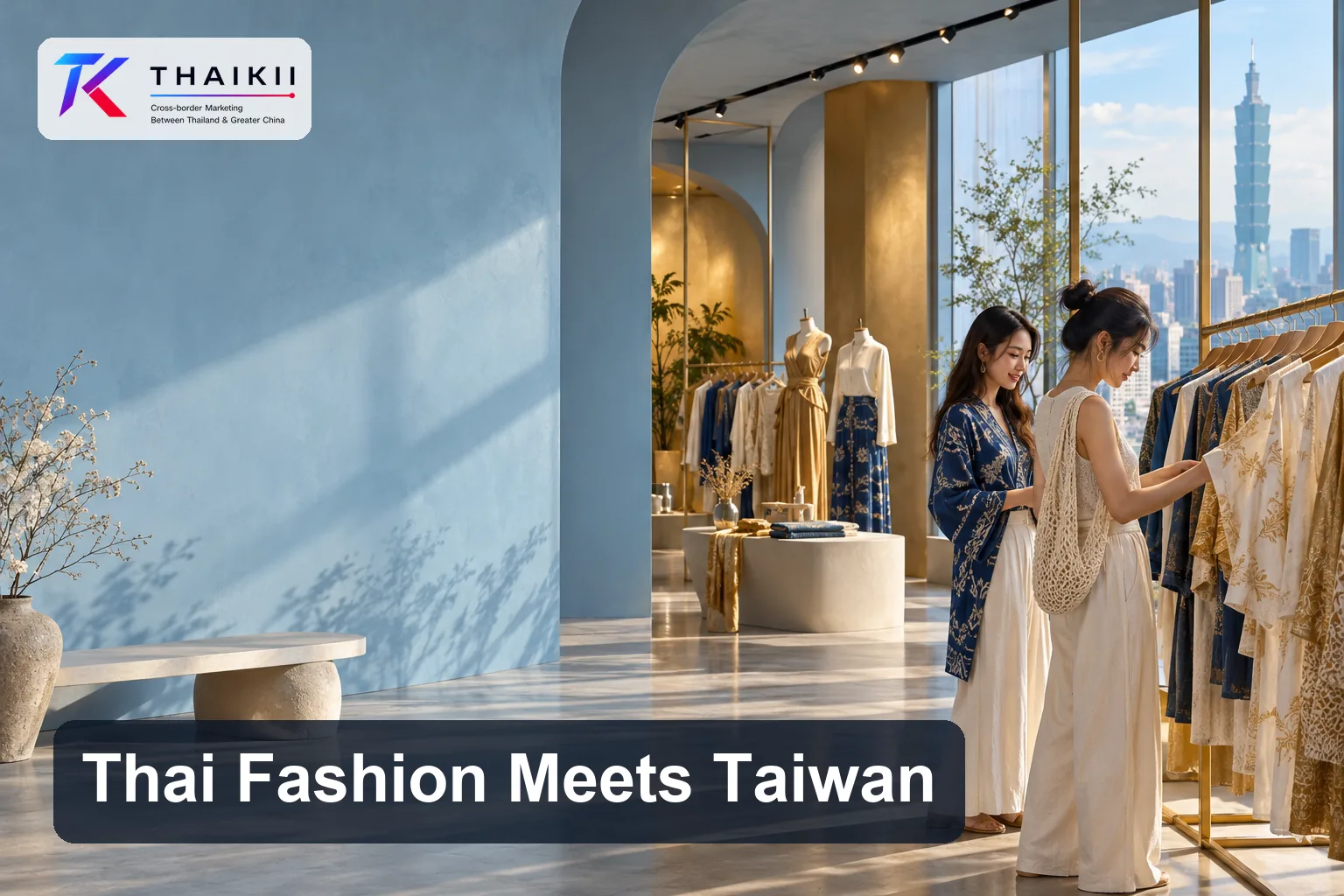
Thai fashion brands can reach young Taiwanese consumers by choosing a specific style community, explaining their products in locally natural Traditional Chinese, and connecting discovery content to a trustworthy buying experience. Start with a focused collection, show how the clothes fit everyday situations, and test whether attention turns into qualified visits and purchases before expanding.
This guide is for Thai fashion founders, export managers, and marketing teams planning their first Taiwan campaign or improving an existing cross-border store. The approach below is a practical testing framework, not a claim that all young shoppers share the same tastes, budgets, or preferred channels.
Start with a style community and a buying situation
Define your first audience through what people wear and why they buy. “Young Taiwanese consumers” is too broad to guide product selection. A university student looking for expressive weekend outfits may evaluate clothing differently from a first-job professional building a versatile wardrobe. Both could like the same brand while needing different evidence before ordering.
Choose one initial buying situation, such as relaxed office dressing, independent streetwear, or statement pieces for social occasions. Then compare the products, prices, photography, and customer questions surrounding that situation. Review public discussions and competitor product pages without assuming that visible likes represent purchase demand.
Interview a small group of prospective customers or work with a local research partner. Ask what they recently bought, what made them hesitate, and which details they checked. Actual shopping experiences are more useful than asking whether someone generally likes Thai fashion.
Translate the findings into a simple positioning statement: who the collection serves, what wardrobe problem it solves, and what makes its design distinctive. Thai origin can add meaningful context, but it should connect to the clothes through materials, construction, creative direction, or a verifiable designer story. Avoid relying on national stereotypes as the main reason to buy.
Make the product page answer real purchase questions
Localization should reduce uncertainty at the point of purchase. Use Traditional Chinese written for Taiwan, with consistent product names, natural clothing terminology, and explanations that match the collection. A fluent headline cannot compensate for an unclear size chart or an incomplete delivery policy.
For each launch item, provide garment measurements in centimeters, fabric composition, care instructions, fit notes, and photographs that show texture and construction. State the model’s measurements and the size worn when that information is available. Distinguish garment measurements from recommended body measurements so shoppers can compare the item with clothing they already own.
Make the commercial details equally clear. Explain the currency used at checkout, shipping destination coverage, delivery estimates, how potential import charges are handled, and the process for requesting help. Publish a returns policy that has been checked for the actual sales arrangement and applicable requirements. Do not copy a domestic Thai policy into a Taiwan storefront without review.
Physical labeling also needs separate attention. The U.S. International Trade Administration’s Taiwan labeling guidance describes Chinese-language labeling requirements. Brands should confirm the apparel-specific rules for their products with their importer or qualified adviser before shipping; translating a website does not complete that work.
Before launch, ask a local reviewer to complete a mobile shopping walkthrough. Record confusing wording, missing details, and unanswered questions, then fix the product pages before increasing traffic.
Build styling content that makes the collection useful
Create content around decisions a shopper can make, rather than a sequence of announcements about the brand. A garment can support several useful stories: how it looks in movement, how its silhouette changes with different styling, what its fabric feels like, and which existing wardrobe pieces it complements.
For example, a relaxed shirt could appear in a short fit demonstration, a three-outfit styling sequence, and a close-up explaining its finish. These are proposed content formats, not guaranteed winners. Test them with the chosen audience and compare the quality of the resulting visits and questions.
Keep Thai creative identity visible through specific details. Show a designer explaining a cut, a documented production process, or the inspiration behind a print. Add accurate Traditional Chinese subtitles or captions so viewers do not have to understand Thai or English to follow the story. Avoid unsupported claims about sustainability, craftsmanship, or cultural authenticity.
Let local creative partners adapt styling and phrasing while preserving accurate product information. A campaign that feels natural in Taiwan may require different examples and pacing from the original Thai campaign, even when the underlying design story remains the same.
Use comments and customer-service questions as a content queue. Repeated questions about transparency, stretch, length, or fit suggest missing information. Answering them through both content and product-page improvements can make the next visitor’s decision easier.
Give each channel a specific job
Select channels according to audience evidence and the team’s ability to maintain them. The International Trade Administration’s Taiwan eCommerce overview describes a market combining online retail, social commerce, and physical retail activity. That context supports testing a connected customer journey, but it does not establish which platform will work best for a particular fashion label.
A visual social account might introduce the collection and demonstrate styling. A localized website can hold the complete product story and purchase information. A customer-service channel can resolve individual questions. A selective pop-up or retail partnership could offer fit feedback if the brand has the budget and operational capacity.
Build Chinese SEO around the questions that remain after discovery. Research Taiwan-specific search language for the relevant garment category, fit concern, material, and styling occasion. Have a local editor validate candidate terms rather than directly converting an English keyword list.
Create a small group of useful pages: a collection page, detailed product pages, a sizing guide, and one or two substantial styling articles. Link them where they help the reader move from inspiration to evaluation. Give each page a clear purpose and avoid publishing nearly identical pages for minor keyword variations.
Make the handoff between channels deliberate. A post about a particular jacket should lead to that jacket or a relevant collection, with the promised information easy to find. Sending every visitor to a general homepage adds unnecessary work and makes campaign results harder to interpret.
Choose KOL partners for audience fit and product explanation
Evaluate creators by the relationship between their audience, their styling, and your collection. A large follower count alone cannot show whether viewers are located in Taiwan, interested in the relevant category, or comfortable with the intended price range.
Ask shortlisted partners for available audience information and examples of comparable fashion work. Read the questions under those posts. Look for thoughtful discussion of fit, materials, and use cases, while recognizing that public comments offer only a partial view of audience quality.
Start with a limited collaboration and a clear brief. Specify the actual products, accurate claims, delivery dates, required disclosures, and how content rights will work. Agree whether the brand may reuse the footage on its website or in paid promotion, for how long, and in which markets. Confirm applicable disclosure requirements before publication.
Give the creator room to explain the garment in their own voice. A useful brief can request a fit demonstration and an honest styling explanation without scripting praise. If a product has limitations, such as a narrow cut or delicate care requirements, accurate disclosure helps customers make suitable choices.
Track the path from collaboration to qualified interest using agreed links or campaign codes where appropriate. Compare landing-page engagement, sizing questions, checkout activity, and purchases alongside views. A creator who generates fewer views but more relevant questions may deserve further testing; assess that possibility using your own campaign evidence.
Run a focused pilot and learn before expanding
Choose a collection small enough to support well. Confirm inventory, photography, translated copy, customer-service ownership, and fulfillment arrangements before setting a launch date. A pilot should test a complete buying experience, not just whether an image attracts attention.
Set a baseline for the commercial decision. Work out the margin remaining after product cost, shipping support, platform fees, expected returns, and campaign costs. Use that calculation to decide how much you can spend learning about a new customer segment. Avoid adopting another brand’s acquisition target without understanding its economics.
During the pilot, review the journey in stages. If content earns attention but few relevant visits, examine the audience and call to action. If product visits produce repeated sizing questions, improve fit information. If checkout starts do not become orders, investigate payment, delivery, or unexpected-cost friction before assuming the collection lacks appeal.
Keep a short weekly decision log: what changed, what evidence appeared, and what the team will test next. Change one major variable at a time when feasible, so the result is easier to interpret. Small samples can be misleading, so combine numerical results with customer feedback.
Expand only when the team can explain both demand and operational performance. The next step might be another product, a second creator, improved search content, or a local retail test. Taiwan can inform later Chinese-speaking market promotion, but each additional market needs its own language, channel, service, and compliance review.
Frequently Asked Questions
Do Thai fashion brands need a Traditional Chinese website before testing Taiwan?
A focused Traditional Chinese landing page or storefront can be enough for an initial test if it provides complete product, sizing, delivery, payment, and support information. The scope should match what the campaign promises. Build a larger site when the product range and customer journey justify it, rather than launching many thin pages.
Should a Thai label compete mainly on price?
Choose a price position that fits the intended audience and the brand’s actual costs. Explain design, materials, construction, and service clearly so shoppers can assess value. Discounting may generate a short-term response, but it cannot tell you whether customers would buy the collection at the price needed for a sustainable business.
How can a brand choose its first Taiwanese fashion creator?
Begin with the audience and buying situation you want to reach. Review the creator’s styling, available audience location data, product explanations, and comparable collaborations. Agree on a limited test with clear deliverables and content rights. Evaluate relevant traffic and customer behavior together with reach instead of selecting solely by follower count.
Can the same Chinese campaign be used across Taiwan and Mainland China?
Reuse accurate brand facts and suitable visual assets where helpful, but review the campaign for each market. Written language, local wording, platform choices, shopping arrangements, and applicable requirements can differ. A Taiwan campaign should be designed for Taiwan first; converting characters alone does not create a complete localization strategy.
Plan your Taiwan fashion launch with Thaikii
If your team needs help connecting Thai brand identity with Taiwan’s customer expectations, contact Thaikii to discuss your collection and launch priorities. Thaikii supports Chinese websites, SEO, social content, KOL collaboration, market-entry strategy, and Chinese-speaking market promotion. A focused conversation can identify which product information, content, and customer-journey improvements belong in your first Taiwan test.