Thai property advertising in Taiwan is not only about translating project information into Chinese. It requires localized SEO, social media storytelling, and a clear lead generation system that helps Taiwanese buyers understand the value of Thai real estate before they contact a sales team.
Thai property advertising is a cross-market marketing process that combines Chinese content, digital channels, buyer education, and conversion strategy to attract Taiwanese and Chinese-speaking audiences interested in Thailand property.
This strategy is especially suitable for Thai developers, real estate agencies, hotel residence projects, branded residences, and property investment companies that want to reach Taiwanese buyers, Chinese-speaking investors, and Greater China market audiences through professional localized marketing.
Why Thai Property Projects Need a Localized Taiwan Advertising Strategy
Thailand has long been one of the most attractive overseas property markets for Taiwanese buyers. Bangkok, Pattaya, Phuket, Chiang Mai, and other key cities are familiar names to many Taiwanese travelers, investors, and lifestyle-oriented buyers. However, being familiar with Thailand does not mean Taiwanese buyers automatically understand Thai property products.
For many Thai developers and real estate companies, Taiwan may look like a small market compared with China. But from a marketing perspective, Taiwan has several advantages. Taiwanese buyers are active online, highly responsive to educational content, and often make overseas property decisions after reading articles, comparing locations, watching social media content, and speaking with trusted consultants. This makes Taiwan a market where high-quality Chinese content and structured lead generation can create long-term value.
The challenge is that property advertising in Taiwan cannot rely only on direct selling. Taiwanese buyers usually want to understand the location, developer background, rental demand, ownership structure, payment schedule, management model, resale potential, and long-term risks. If a Thai property project only presents beautiful renderings and basic price information, it may generate attention but fail to build enough trust.
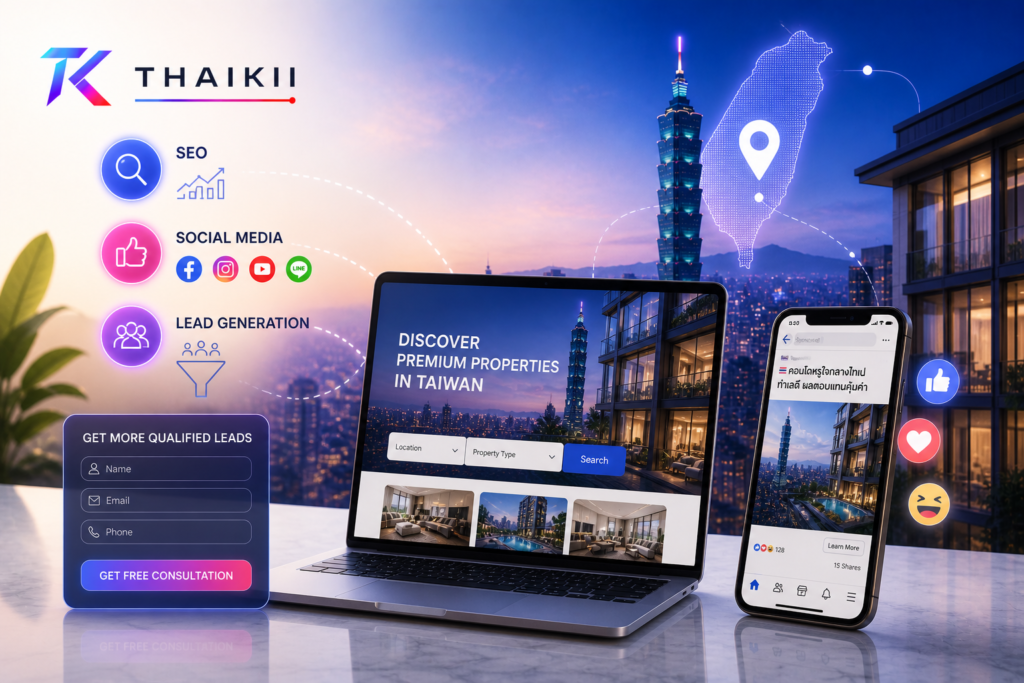
This is why Thai property advertising in Taiwan needs a complete digital marketing structure. SEO helps Thai projects appear when buyers search for information. Social media helps create recognition and emotional interest. Lead generation helps convert curious readers into qualified prospects. When these three parts work together, Thai property brands can build a stronger presence in the Taiwan market.
At THAIKII, we understand both Thailand-facing brand communication and Chinese-language market behavior. Our experience in cross-border marketing, Chinese content planning, property-related communication, and Taiwan audience engagement allows us to help Thai businesses present their value in a way that local buyers can understand and trust.
Taiwanese Buyers Do Not Only Buy Property; They Buy Clarity
When Taiwanese buyers consider overseas property, they are rarely making a decision based on price alone. They want clarity. They want to know why this city matters, why this project is different, whether the price is reasonable, and whether the buying process is safe.
This is especially important for Thai property projects. Thailand is attractive because it combines lifestyle, tourism, rental potential, and relatively accessible entry prices compared with many developed markets. However, Taiwanese buyers may still have questions about foreign ownership, legal procedures, rental management, local demand, currency risk, maintenance fees, and long-term exit options.
A successful Thai property advertising strategy should not only answer the question: “Why buy this project?” It should also answer: “Why does this project make sense for a Taiwanese buyer?”
That difference is important. Thai developers may be used to presenting projects through location highlights, facilities, room layouts, and promotional campaigns. Taiwanese buyers, however, often need a more complete decision-making path. They may compare Thai property with Japan property, Australian property, Malaysian property, or even Taiwan’s own housing market. They may also evaluate whether the property is suitable for lifestyle use, asset allocation, rental income, retirement planning, or future travel convenience.
Therefore, the advertising message must be adapted. Instead of using a simple sales pitch, Thai property brands should create content that explains the project from the buyer’s perspective. This includes market education, location analysis, project positioning, buyer scenario planning, and practical guidance.
In other words, property advertising in Taiwan should be less like a brochure and more like a trust-building journey.
SEO: The Foundation of Long-Term Thai Property Visibility in Taiwan
Search engine optimization is one of the most important tools for Thai property advertising in Taiwan. When a Taiwanese buyer starts researching Thai property, they often search in Traditional Chinese. They may type keywords such as “泰國買房”, “曼谷房地產”, “泰國房產投資”, “普吉島買房”, “曼谷公寓”, or “泰國房產風險”.
If a Thai developer does not have localized Chinese content, the project may be invisible at the exact moment when potential buyers are actively searching. This is a missed opportunity because search traffic is usually more intentional than general social media exposure. A person searching for Thai property information is already showing interest. The key is to provide useful content before competitors do.
However, Chinese-language SEO is not the same as direct translation. A project page translated from English or Thai may not match how Taiwanese buyers search online. For example, Taiwanese users may use different property terms, different city names, and different decision-making language. They may search for “海外置產”, “出租管理”, “泰國預售屋”, “外國人買泰國房子”, or “曼谷捷運房產”. These phrases reflect local search habits and should be included naturally in the content strategy.
A strong SEO plan for Thai property advertising should include several layers. The first layer is the official project page, which introduces the property clearly. The second layer is educational blog content, which answers buyer questions. The third layer is comparison content, such as Bangkok versus Phuket, condo versus villa, or Thai property versus other overseas markets. The fourth layer is conversion content, which encourages readers to request brochures, book consultations, or join property seminars.
For Thai developers, this kind of content system can become a long-term digital asset. Unlike short-term ads that disappear when the budget stops, SEO content continues to bring traffic over time. It also makes the brand look more professional because buyers can find detailed explanations instead of only promotional slogans.
At THAIKII, our team helps Thai property brands build Chinese-language SEO content that fits the Taiwan market. We do not simply translate. We restructure the message, adjust the search intent, and create content that speaks to how Taiwanese buyers actually think.
Social Media: Turning Thai Property into a Story Taiwanese Buyers Want to Follow
While SEO captures search demand, social media creates attention and emotional connection. This is especially important for Thai property projects because many Taiwanese buyers first become interested in Thailand through travel, lifestyle, food, entertainment, wellness, and cultural experiences.
A Thai property project should not only show buildings. It should show the lifestyle around the property. For Bangkok, this may include transport convenience, shopping districts, international schools, business zones, cafés, and urban energy. For Phuket, it may include resort living, sea views, wellness tourism, hotel-style management, and vacation rental possibilities. For Chiang Mai, it may include slower living, cultural atmosphere, digital nomad communities, and long-stay comfort.
Social media allows Thai property brands to communicate these lifestyle elements visually. But the content still needs structure. Random beautiful photos may attract likes, but they do not necessarily generate qualified leads. A good social media strategy should connect lifestyle storytelling with buyer education.
For example, one post may explain why a Bangkok BTS location matters. Another may compare different buyer purposes: self-use, rental, vacation, or long-term asset planning. Another may introduce the developer’s background and past projects. Another may answer common questions about foreign ownership or property management. Over time, these posts help buyers move from curiosity to trust.
For Taiwan audiences, platforms such as Facebook, Instagram, YouTube, LINE, and search-driven blog content can work together. Facebook is still useful for community discussion and article distribution. Instagram works well for visual lifestyle and project atmosphere. YouTube can explain longer topics such as location analysis or buying process. LINE can support private consultation and lead follow-up. A website remains the central place where all traffic should eventually return.
The key is not to post more, but to post with a conversion purpose. Every piece of content should help the buyer understand one more reason to consider the project or take one more step toward inquiry.
THAIKII helps Thai brands design social media content that fits Chinese-speaking audiences. We understand that Taiwan users often respond better to practical explanations, trustworthy tone, and clear comparison logic than to overly aggressive sales language. This helps Thai property brands communicate in a way that feels professional rather than pushy.
Lead Generation: From Online Attention to Real Sales Opportunities
Many Thai property companies invest in ads or social media exposure but struggle to turn attention into qualified leads. This is usually not because the project is unattractive. It is often because the lead generation system is incomplete.
A proper lead generation funnel should guide potential buyers step by step. First, the buyer discovers the project through SEO, social media, ads, or a partner channel. Then, they land on a page that clearly explains the project and answers key questions. Next, they are invited to take action, such as downloading a brochure, requesting price information, booking a consultation, joining a webinar, or asking for available units.
The call-to-action must match the buyer’s decision stage. A cold audience may not be ready to book a viewing immediately. But they may be willing to download a guide about “How Taiwanese Buyers Can Evaluate Bangkok Property”. A warmer audience may request a price list. A highly interested buyer may want a one-on-one consultation.
This is where many cross-border property campaigns fail. They push every user toward the same action too early. But overseas property buyers usually need more time and information. If the marketing system offers only one hard sales step, many potential buyers leave without converting.
A better approach is to create multiple lead entry points. Educational content can collect early-stage leads. Project comparison pages can attract mid-stage buyers. Consultation forms and LINE contact buttons can capture high-intent prospects. Offline events, webinars, and private briefings can further qualify serious buyers.
For Thai property advertising in Taiwan, lead quality matters more than raw lead quantity. A large number of low-intent leads can waste the sales team’s time. A smaller number of well-educated, properly filtered prospects can create better sales results. Therefore, the content, form design, follow-up process, and sales communication must be planned together.
THAIKII can support this process by helping Thai property companies create localized landing pages, Chinese lead magnets, social media content, email follow-up ideas, and consultation-driven conversion paths. Our goal is not only to increase exposure, but to help brands build a realistic path from attention to inquiry.
Why Direct Translation Is Not Enough for Thai Property Advertising
One of the most common mistakes in cross-border property marketing is assuming that translation equals localization. It does not.
A Thai property brochure may work well for Thai buyers or international buyers who already understand the local market. But Taiwanese buyers may need different context. They may not know which Bangkok districts are more suitable for rental demand. They may not understand the difference between a tourist-driven market and a long-term residential market. They may need more explanation about property management, tax issues, payment terms, and future resale.
A direct translation may preserve the words, but it often fails to translate the decision logic. This can make the content feel distant or unclear.
Localization means rebuilding the message for the target audience. It includes choosing the right keywords, using Taiwan-friendly Chinese terms, adjusting the article structure, explaining unfamiliar concepts, selecting stronger selling points, and removing points that may not matter to local buyers.
For example, a Thai project may emphasize luxury facilities. Taiwanese buyers may appreciate those facilities, but they may care more about whether the location has rental demand, whether the building has good management, whether the developer has a credible track record, and whether the purchase process is transparent. Therefore, the localized content should not simply list facilities. It should connect facilities to the buyer’s purpose.
This is also why Thai property advertising in Taiwan should involve people who understand both marketing and the property decision process. The content must be attractive, but it must also be credible. The tone must be persuasive, but not exaggerated. The structure must support SEO, but not feel unnatural.
At THAIKII, we help Thai property brands avoid the “translated brochure” problem by creating content that is built for Chinese-speaking buyers from the beginning.
Taiwan as a Gateway to Greater China Audiences
For Thai property brands, Taiwan can also be a strategic testing ground for the broader Chinese-speaking market. Taiwan users are active content readers, familiar with overseas travel, and responsive to well-structured digital marketing. A strong Traditional Chinese content base can also support visibility among Hong Kong, Macau, and overseas Chinese-speaking audiences.
Although Taiwan and China require different platform strategies, the foundation of Chinese-language positioning is still valuable. A Thai property project that has clear Chinese content, localized market explanations, and a professional lead generation system will be better prepared for broader Greater China marketing.
This does not mean one message should be used everywhere. Taiwan, Hong Kong, and China have different media habits, buyer concerns, and regulatory environments. However, building a strong Chinese content framework in Taiwan can help Thai brands understand what questions Chinese-speaking buyers ask, what selling points attract attention, and what concerns need to be addressed before conversion.
For Thai companies that want to expand beyond local or English-speaking buyers, Taiwan is a practical and manageable starting point.
How THAIKII Supports Thai Property Brands
THAIKII is positioned to help Thai brands enter Chinese-speaking markets with localized digital marketing. For Thai property companies, our role is to translate business value into market-ready communication.
We can support Thai developers, agencies, property consultants, hotel residences, and branded residence projects through several connected services:
- Chinese-language SEO content and blog strategy
- Localized project pages and landing pages
- Social media content planning for Taiwan audiences
- Lead generation funnels and consultation-oriented CTA design
- KOL and media collaboration planning
- Offline event and property seminar support
- Brand storytelling for Greater China market expansion
Our advantage comes from understanding both Thailand-related business opportunities and Chinese-language content behavior. We know that successful property advertising requires more than attractive visuals. It requires trust, education, and a structured buyer journey.
For Thai property brands, this means we can help turn complex project information into clear marketing messages. We can help explain why a location matters, why a project fits a certain buyer type, and why Taiwanese clients should take the next step.
A Practical Advertising Framework for Thai Property Projects
A strong Thai property advertising campaign in Taiwan should usually begin with positioning. The project must be clearly defined. Is it a Bangkok city condo for rental demand? A Phuket resort residence for vacation lifestyle? A branded residence for high-end buyers? A Chiang Mai property for long-stay living? Different positioning leads to different content and different leads.
After positioning, the next step is content architecture. The official landing page should present the project clearly. SEO articles should answer common buyer questions. Social media posts should create awareness and repeated exposure. Lead forms should be designed based on buyer readiness.
Then comes traffic. SEO provides long-term search traffic. Social media provides audience engagement. Paid ads can accelerate visibility. KOL or media partnerships can add credibility. Offline events or webinars can help convert serious buyers who need more explanation.
Finally, the sales team needs localized follow-up materials. A lead who downloads a brochure may need a Chinese FAQ. A lead who asks about rental return may need a location explanation. A lead who compares Bangkok and Phuket may need a buyer-purpose comparison. The smoother the communication process, the more likely the lead can move forward.
This is where marketing and sales must work together. Good advertising does not end when a lead is collected. It continues through education, trust-building, and consultation.
What Thai Brands Should Prepare Before Entering the Taiwan Market
Before launching a Taiwan-focused property campaign, Thai companies should prepare the basic information Taiwanese buyers will ask for. This includes project location, developer background, unit types, payment schedule, ownership structure, management fees, rental management options, expected completion date, nearby transport, and lifestyle facilities.
The brand should also prepare a clear answer to one important question: “Why should a Taiwanese buyer choose this project instead of another overseas property option?”
This answer should not be generic. It should be specific to the project. It may be location advantage, price accessibility, rental demand, developer reputation, tourism growth, branded management, or lifestyle value. Once this core message is clear, all SEO, social media, and lead generation content can be built around it.
Thai property brands should also be ready to communicate patiently. Overseas buyers need time. They may ask many questions before making an appointment. This is normal. The role of marketing is to reduce uncertainty and increase trust.
Building Trust Before Selling the Property
The Taiwan market rewards brands that educate before they sell. This is especially true for overseas property.
A Thai property project may have strong potential, but if the buyer does not understand the market, the sales message will not be enough. The brand must first build trust through useful information, transparent communication, and consistent presence.
That is why SEO, social media, and lead generation should not be treated as separate tasks. They should work as one integrated system. SEO brings in interested buyers. Social media keeps the brand visible. Lead generation captures demand. Follow-up content helps buyers move forward.
For Thai developers and property companies, Taiwan is not only a place to run ads. It is a market where professional Chinese-language communication can create long-term brand value. With the right strategy, Thai property projects can reach Taiwanese buyers more effectively, build stronger trust, and open more opportunities across the Greater China market.
THAIKII helps Thai property brands localize their message, build digital visibility, and connect with Chinese-speaking buyers through practical marketing strategies. If your project is ready to reach Taiwan, Chinese-speaking investors, or the broader Greater China market, the next step is not only advertising. It is building a complete market entry communication system.
With years of cross-border marketing experience, THAIKII Marketing helps brands build meaningful connections with Chinese-speaking audiences across Taiwan, China, Hong Kong, and other key Asian markets.
From SEO strategy and social media management to Chinese website development, local offline events, and KOL collaborations, we provide flexible support based on each brand’s market goals, industry background, and target customers. Whether you are planning your first market entry or looking to strengthen your existing presence, our team can help you create a localized, practical, and results-oriented marketing approach.
Frequently Asked Questions (FAQs)
Taiwanese buyers are familiar with Thailand and actively research overseas property online. With the right Chinese-language SEO and social media strategy, Thai property companies can reach buyers who are already interested in lifestyle, rental potential, and overseas asset planning.
A strong strategy usually combines a Chinese website, SEO blog content, Facebook, Instagram, YouTube, LINE, landing pages, and sometimes KOL or offline event support. The best platform mix depends on the project type and target buyer segment.
Better leads come from clear positioning, educational content, localized landing pages, useful downloadable materials, consultation forms, and structured follow-up. The goal is not only to collect contacts, but to attract buyers who understand the project and are ready for deeper discussion.
Discover more from Thaikii 泰奇行銷
Subscribe to get the latest posts sent to your email.