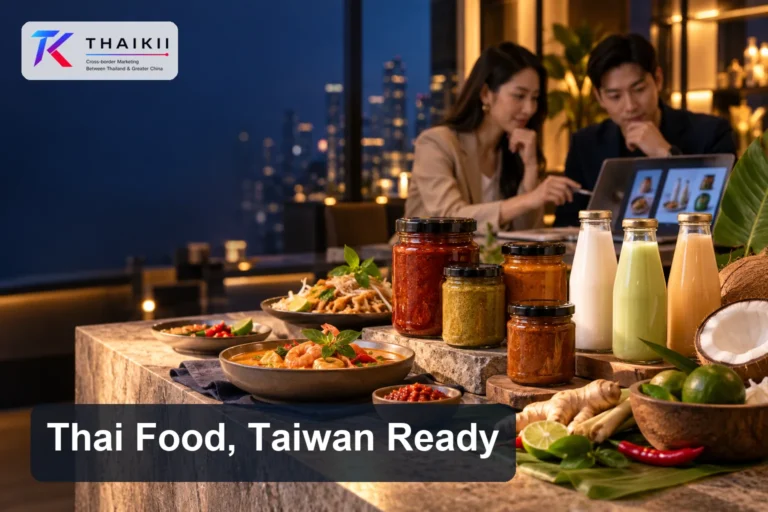

Chinese copywriting for Thai brands works when it does more than translate a Thai or English message. It reshapes the promise, evidence, tone, and next step so a Chinese-speaking reader can quickly understand why the brand is relevant and what to do next. For Thai companies entering Taiwan, that means writing in Traditional Chinese with local search behavior, buying questions, and trust signals in mind.
This matters most for tourism, hospitality, food and beverage, wellness, beauty, property, and service brands that already have a strong offer but need to explain it clearly to a new market. Good copy helps a visitor move from curiosity to a useful action, whether that is comparing a service, saving a product page, joining a LINE contact list, or starting a business conversation.
Chinese Copywriting Is Localization, Not Word Replacement
The strongest Chinese copywriting for Thai brands begins with the reader's decision, not the source sentence. Translation preserves language. Localization decides which benefit should lead, which detail proves the claim, and which call to action feels appropriate in the target market.
A Thai hospitality brand may lead locally with atmosphere, personal care, or an experience rooted in place. A Taiwan-facing page may need to lead first with location, booking clarity, room fit, transport, or what distinguishes the stay from similar options. Both messages can be true, but their order changes how quickly a reader understands the offer.
This is especially important when a brand uses words such as premium, authentic, natural, or personalized. These are useful positioning ideas, but they do not explain enough on their own. Chinese copy should turn them into observable details: ingredients, service steps, product origin, appointment process, delivery coverage, consultation method, or a clear comparison point.
Choose a Tone That Matches the Market and the Moment
Tone should reflect the category, audience, and stage of the buyer journey. Taiwan business readers often respond well to writing that is direct, respectful, and specific. A page can still be warm and creative, but it should not force excitement before it earns credibility.
For awareness-stage content, use an informed, helpful tone. Explain a market problem and give the reader a way to assess it. For a service page, make the scope and process easy to scan. For a product page, describe the result, supporting detail, and practical conditions such as availability or usage. For lead-generation copy, make the first contact feel low-friction rather than demanding.
A useful editorial check is to ask whether each claim could be understood by a reader who has never heard of the brand. If the answer is no, add context instead of adding more adjectives. Clear copy is often more persuasive than copy that sounds expensive or dramatic.
Avoid Imported Phrases That Lose Their Meaning
Directly importing Thai promotional language can make a Chinese page sound vague, overly formal, or disconnected from how readers search. The same risk applies to Mainland China wording when the immediate audience is Taiwan. Traditional Chinese vocabulary, punctuation, interface labels, dates, and examples should match the Taiwan context.
This does not mean every sentence must be narrowly local. It means the reader should not need to translate the brand's intention in their head. The page should make practical sense at the point where they encounter it.
Build Cultural Context into the Message
Cultural context is the set of assumptions a reader brings to a page. For a Thai brand entering Taiwan, it affects what counts as proof, what questions appear before purchase, and how much explanation is needed before a promise feels believable.
Start by mapping the reader's likely concerns. A Taiwanese customer considering a Thai wellness treatment may want to know the treatment style, hygiene approach, appointment options, language support, and expected experience. A business buyer evaluating a cross-border service may want to know the working process, local-market understanding, deliverables, and how communication will be managed.
Then match the copy to those concerns. Use short headings that answer real questions. Put the practical answer first. Add only the background that helps the reader evaluate it. This structure supports both human readers and search systems looking for concise, well-organized answers.
Cultural relevance also affects examples. Instead of using generic global claims, describe the situation a Thai brand faces when entering Taiwan: adapting a website, clarifying product benefits in Traditional Chinese, planning Chinese SEO, working with local KOLs, or making social content understandable across markets.
Write for Search Intent Before You Write for Style
Chinese copywriting for Thai brands should align with the words and questions people use before they are ready to contact a company. Search-led copy does not mean repeating one phrase mechanically. It means building pages and articles around one clear intent.
For example, a reader searching for Chinese website localization may need a practical explanation of page structure, terminology, and local trust signals. A reader searching for Taiwan market entry strategy may need a sequence for research, positioning, content, and lead capture. A reader comparing KOL collaboration may need criteria for choosing creators and measuring fit.
Use the primary keyphrase naturally in the title, opening, a relevant heading, metadata, and one FAQ answer. Then support it with specific language the reader would expect to see. This gives the page a clear topic without making it sound repetitive.
A simple page structure often works best:
- Lead with the reader's problem and the direct answer. – Explain the decision criteria or process. – Show the practical details that reduce uncertainty. – Offer a next step that matches the reader's readiness.
Make Conversion Copy Specific and Low-Friction
Conversion copy is the bridge between useful information and a meaningful next action. It should not pressure a reader into a commitment they are not ready to make. Instead, it should clarify what happens after they click, submit, or contact the brand.
For Thai brands, effective calls to action often name the support available rather than using a generic instruction such as “Contact us now.” A cross-border marketing page can invite a reader to discuss a Chinese website, SEO priorities, social content, KOL collaboration, or a Taiwan market-entry plan. A hotel page can explain how to check room availability or ask about a stay. A product page can point to a collection, retailer, or consultation.
The surrounding copy matters as much as the button text. Add a sentence that tells the reader who will respond, what information to prepare, or what the first conversation can cover. This makes the action feel considered and useful.
Keep One Brand Voice Across Website, SEO, and Social Content
A localized brand voice should remain recognizable across channels, but it does not need to repeat identical wording. Website copy can be more detailed and structured for search. Social posts can open with a sharper observation. KOL briefs can prioritize product use, audience fit, and talking points. The underlying promise and evidence should remain consistent.
Create a small Chinese messaging system before publishing at scale. Define the audience, the main brand promise, the preferred tone, proof points, terms to avoid, and the actions each content type should encourage. This prevents a common problem: a polished website that sounds unlike the social content or sales follow-up that comes after it.
Review the system regularly as the brand learns from inquiries, customer questions, search performance, and local partners. Copywriting is not a one-time translation task. It is a working part of market entry and customer communication.
A Practical Review Checklist for Chinese Copy
Before publishing, check whether the copy answers a real reader question in the first few lines. Confirm that Traditional Chinese is appropriate for the intended Taiwan audience, that examples match the offer, and that claims have enough detail to be credible. Make sure headings are useful on their own, the keyphrase is natural, and the next step explains what the reader can expect.
Also check for unnecessary jargon, literal translations, and generic claims. If a sentence could apply to any brand in any country, it probably needs a more concrete detail. If a call to action asks for too much too soon, replace it with a smaller, clearer invitation.
Measure Whether the Copy Is Doing Its Job
Copy should be reviewed against the behavior it is meant to support. For an SEO article, look at qualified search visibility, engagement with the next relevant page, and the questions that appear in inquiries. For a landing page, review whether visitors understand the offer before they reach the form, which sections hold attention, and whether the contact request matches the service being offered. These signals do not replace business judgment, but they reveal where a message is unclear or a reader needs more confidence.
Use that learning to revise one part of the message at a time. Test a clearer opening, a more specific proof point, a better heading, or a less demanding call to action. Keep the source of truth for terminology and brand voice updated as these decisions are made. This gives Thai teams, Chinese writers, designers, and sales contacts a consistent way to communicate as the Taiwan market program develops.
Plan Chinese Copywriting with Thaikii
Thai brands entering Chinese-speaking markets need copy that connects market strategy with everyday customer decisions. Thaikii helps brands plan Chinese websites, SEO, social content, KOL collaboration, market-entry strategy, and Chinese-speaking market promotion with localization at the center.
If you are preparing a Taiwan-facing website or refining an existing Chinese content system, contact Thaikii to discuss the audience, pages, search intent, and conversion path that best fit your next market step.
Frequently Asked Questions
What is Chinese copywriting for Thai brands?
Chinese copywriting for Thai brands is localized writing that adapts a brand's message, proof points, tone, and calls to action for Chinese-speaking readers. It goes beyond direct translation by addressing local search intent, cultural context, and buyer questions.
Why is direct translation not enough for Taiwan marketing?
Direct translation can preserve words while missing the order of information, vocabulary, examples, and trust signals that Taiwan readers expect. Localized copy makes the offer easier to understand and evaluate in Traditional Chinese.
How can copywriting improve conversion for a Thai brand?
Conversion improves when copy explains a specific benefit, gives credible details, answers practical concerns, and offers a low-friction next step. The goal is to reduce uncertainty before asking a reader to contact, book, or buy.
Which channels need localized Chinese copy?
A Thai brand should align localized Chinese copy across its website, SEO articles, landing pages, social content, KOL briefs, email follow-up, and lead forms. Each channel can use a different format while keeping the same core brand promise.