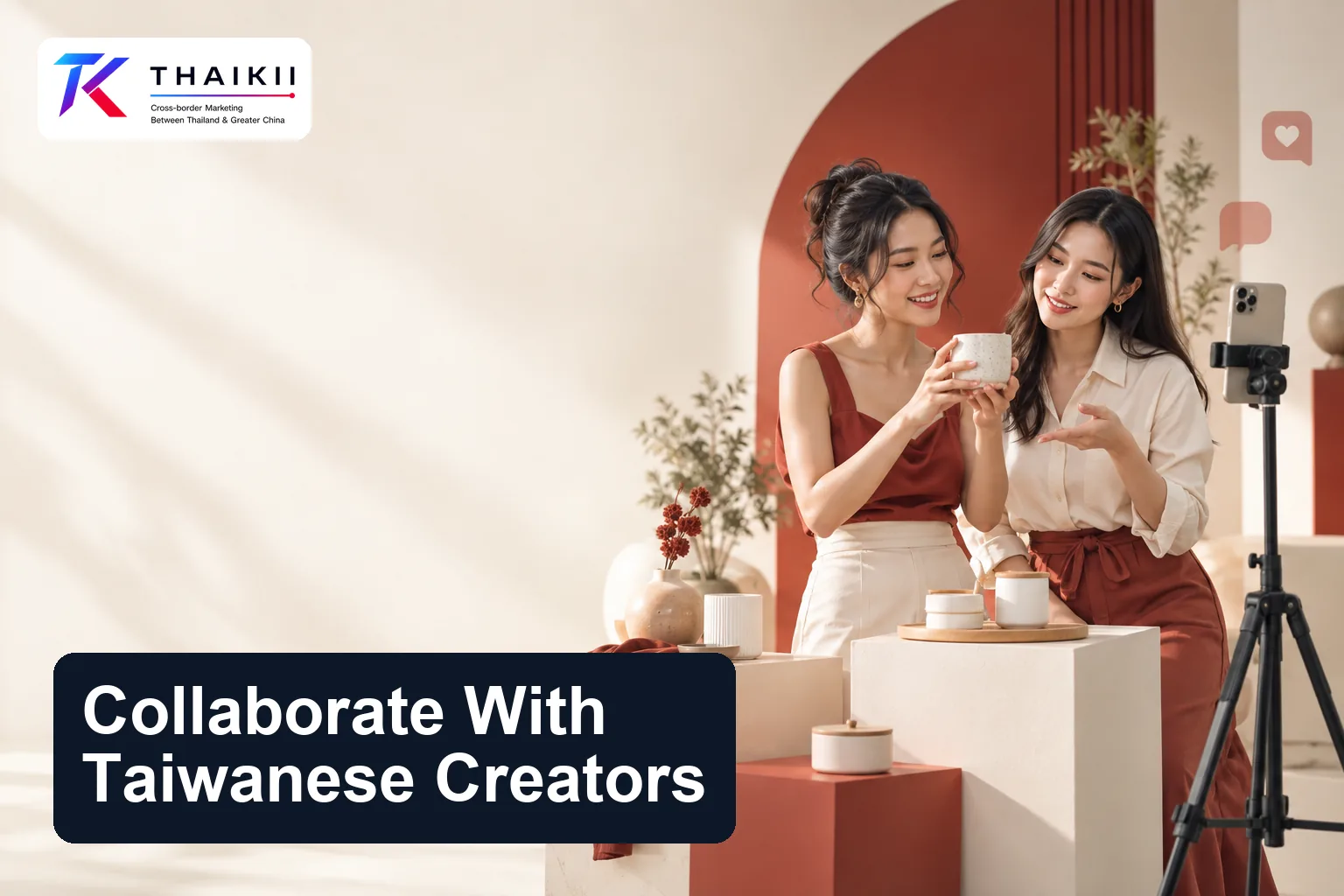
Thai brands can work with Taiwanese KOLs effectively by choosing creators whose audiences match a specific customer need, agreeing on a clear collaboration brief, and connecting each piece of content to a useful Chinese-language destination. Begin with a focused pilot that tests the message, the working relationship, and the path from interest to inquiry before expanding the program.
This guide is for Thai brand owners, hotel teams, lifestyle businesses, and marketing managers planning Taiwan market entry. It focuses on how to organize a collaboration, from the first shortlist to the post-campaign review, so that creator content supports a broader Chinese content marketing strategy.
Define the customer decision before choosing a creator
Start by naming the decision you want to help someone make. A traveler comparing hotels needs different information from a shopper discovering a Thai homeware brand. A creator can introduce a product, demonstrate its use, explain an experience, or answer objections. Asking one collaboration to perform all of these jobs makes the brief difficult to execute and the results difficult to interpret.
Write a simple campaign statement: who the audience is, what they currently hesitate about, and what useful action the content should encourage. For example, a hotel might want independent travelers to understand room suitability and visit a Traditional Chinese information page. A lifestyle brand might want viewers to examine materials and check delivery details. These are planning examples, not predicted outcomes.
Distinguish between paying for access to an established audience and commissioning content for your own channels. Some creators offer both, but the deliverables and rights differ. A beautiful video does not automatically include publication on the creator's account, permission for paid promotion, or an editable source file. Establish which business need you are buying before comparing proposals.
Choose one primary measure linked to that need. Relevant visits, completed inquiries, and usable creative assets answer different questions. Keep supporting measures, such as comments or video engagement, to explain the main result rather than treating every visible number as an equally important target.
Evaluate audience fit and working quality together
Build a shortlist around subject relevance and audience evidence. Ask creators for recent audience location information and examples of comparable content. A Chinese-speaking audience is not necessarily a Taiwan-based audience, and a Taiwanese creator may reach people across several markets. Review the available evidence instead of assuming location from language or nationality.
Look through a sample of ordinary posts as well as sponsored work. Notice the questions followers ask, the specificity of replies, and whether discussions relate to your intended customer. A travel account that mainly attracts photography enthusiasts might produce attractive hotel content without reaching many people currently planning a stay. That could still suit an awareness objective, but it should be an intentional choice.
Avoid relying on a single unusually successful post. Ask how recent comparable content performed and what factors influenced it. Do not demand private follower information; aggregated audience data and an explanation of the creator's approach are more appropriate starting points. Treat unexplained differences between audience size and meaningful interaction as questions to investigate, not automatic evidence of misconduct.
Working quality matters alongside audience fit. Assess whether the creator asks thoughtful questions, describes a realistic production process, and identifies limitations early. A smaller specialist who can explain the product clearly may be a better pilot partner than a broad account whose usual style conflicts with the brand. Compare the complete scope and production requirements, not follower counts alone.
Build a localized brief with room for honest storytelling
Give the creator enough context to make the story useful. Explain the Thai brand's background, the product's intended use, and the customer questions that need answers. Provide accurate product information, approved visuals, and a contact who can resolve factual uncertainties. Keep essential facts separate from optional creative suggestions so the creator knows where judgment is welcome.
For Taiwan-focused content, plan Traditional Chinese wording and local terminology from the beginning. Localization also affects the examples, explanations, and information sequence. A phrase that sounds persuasive in a Thai campaign may need a more concrete explanation for a new audience. Ask a Taiwan-aware Chinese editor to review meaning and clarity while preserving the creator's voice.
The brief should specify the format, main customer question, required factual points, destination link, disclosure approach, and review schedule. Describe what successful communication looks like: for instance, viewers should understand how to use the product and where to find delivery information. Avoid a script so rigid that the creator cannot describe their own experience naturally.
Arrange genuine access to the product or service before requesting an experiential recommendation. Allow enough time for the creator to try it and raise concerns. If the experience reveals a weakness, decide whether to improve the offer, explain the limitation, or change the content angle. Requiring predetermined praise undermines the value of independent expression and can create misleading claims.
For broader language planning, connect the brief with your Chinese copywriting approach. Keep product names, key benefits, and practical details consistent across the creator's content, website, and customer replies.
Agree on deliverables, permissions, and disclosures in writing
Confirm the commercial scope before production begins. A written agreement should identify the content pieces, publication channels, dates, review stages, included revisions, payment arrangements, and reporting expectations. It should also explain what happens if products arrive late, a shoot is postponed, or a factual correction is needed after publication.
Separate factual review from creative preference. The brand should check product details and unsupported claims, while changes to an agreed creative concept may require additional time or fees. Name one person to consolidate feedback. Conflicting comments from several departments can turn a manageable revision into a production delay.
Clarify content rights explicitly. Reposting a finished video, translating its captions, cutting it into shorter clips, using it in advertising, and receiving raw footage are different permissions. Specify duration, territories, channels, attribution, and any exclusivity. Check whether music, locations, or other participants introduce additional restrictions. Do not assume that paying for a post grants unlimited future use.
Taiwan's Fair Trade Commission explains that endorsements should reflect truthful opinions or experience and that certain relationships between advertisers and endorsers require disclosure. Paid and gifted relationships are included in its definition of such connections. Review the FTC's endorsement and testimonial guidance when agreeing on the content.
As a practical production step, make the commercial relationship clear in the published content and review the wording in context. Avoid hiding important information behind vague expressions. Product-specific claims may need additional review, particularly when they concern health, beauty effects, or investment outcomes. Resolve those questions before filming rather than expecting the creator to establish the evidence.
Prepare the Chinese-language path after the post
The destination should continue the conversation started by the creator. Send people to a page that answers the same customer question, with matching product names and current information. A general English homepage can make visitors search again for details that the collaboration has just encouraged them to investigate.
Prepare the essential information before the content goes live. Depending on the offer, this may include availability, delivery locations, booking conditions, product specifications, or a clear inquiry form. Do not advertise an ordering or support process that the team cannot actually provide. Test the page on a phone and confirm that someone can complete the intended next step.
Assign a Chinese-speaking response owner and agree on how questions will reach the brand. The creator may answer questions about personal experience, but order problems or technical details usually need a designated business contact. Give that person the final content and offer details so customers receive consistent answers.
Connect short-lived social attention with useful website content. Questions raised during the collaboration can inform Chinese SEO pages, buying guides, and FAQs. With the appropriate permissions, selected creator assets can illustrate those pages. Treat Taiwan as a defined market in this planning; a separate Greater China marketing program may require different language choices, channels, and customer journeys.
Run a focused pilot and decide what to repeat
Keep the first collaboration small enough to review carefully. Choose a clear audience hypothesis, a manageable set of deliverables, and a destination that is ready. Record the starting conditions, including existing traffic and concurrent promotions, so the team has context when interpreting changes. The purpose is to learn which combination deserves further investment.
Use distinct campaign links where practical, and check that tracking works before publication. Compare the reporting available from the creator with website visits and inquiries. Ask how each metric is defined: a view, a reach figure, and a completed action are not interchangeable. Codes can provide additional clues, but shared codes and untracked visits limit attribution.
Review the content of responses as well as totals. Questions about availability may indicate useful purchase interest; repeated confusion about the same feature may reveal an unclear message. Strong attention with few relevant visits could reflect a weak next step, while relevant visits with few inquiries might point to missing information or an inconvenient form. These are hypotheses to test, not conclusions from one number.
Hold a short review with the creator and the internal team. Identify which explanation helped, what production friction occurred, and what audience feedback should inform the next brief. Repeat the strongest elements with a specific adjustment. A longer partnership makes sense when audience relevance, dependable collaboration, and useful business outcomes support it; simply publishing more often is not a strategy.
Frequently Asked Questions
Should a Thai brand start with a large KOL or a specialist creator?
Start with the person whose audience and content approach fit the customer decision you want to support. A specialist may be useful for explaining a specific product, while a larger account may suit broader awareness. Compare relevant audience evidence, deliverables, working quality, and total cost before choosing.
Can a Thai brand collaborate without a Taiwanese office?
An office is not the first requirement for organizing content. You still need a reliable contact, clear payment and delivery arrangements, localized information, and a team that can handle inquiries. Check the requirements of your actual sales or service model separately from the creator collaboration.
Does sending a free product guarantee a published review?
No. Agree in advance whether the arrangement is an unconditional gift or a collaboration with specific deliverables. A creator should have room to describe an honest experience. Clarify expectations and disclosure before sending products, rather than assuming that delivery creates an obligation to publish.
How soon should the brand evaluate results?
Agree on reporting checkpoints that reflect the content format and customer decision. Review initial delivery and engagement, then allow time for relevant inquiries or purchases to emerge. Longer decisions need a longer observation period. Avoid comparing campaigns with different reporting windows as though the figures are equivalent.
Plan your Taiwan creator collaboration with Thaikii
A useful creator partnership needs a clear story and a customer journey that can support the attention it earns. Thaikii connects Thai brand context with Taiwan and Chinese-speaking audiences through Chinese websites, SEO, social content, KOL collaboration, and market-entry strategy. If you are planning Chinese-speaking market promotion, contact Thaikii to discuss your audience, existing content, and the practical steps needed for a focused first collaboration.
Discover more from Thaikii 泰奇行銷
Subscribe to get the latest posts sent to your email.