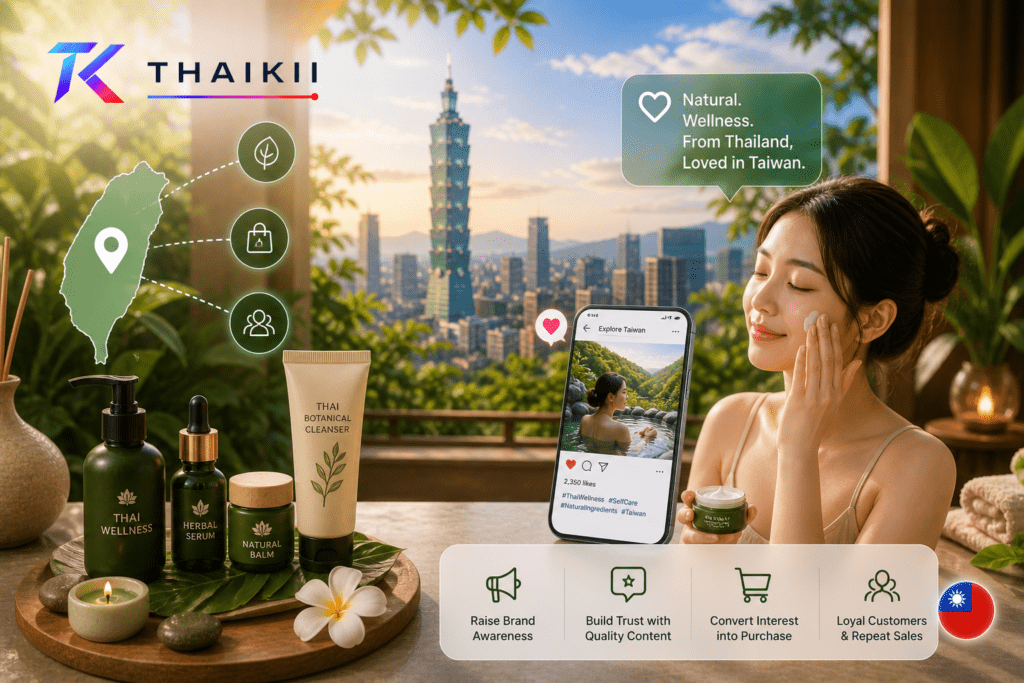
Thai wellness brands can attract Taiwanese customers by combining authentic Thai wellness culture with localized Chinese-language marketing, trust-building content, SEO strategy, social media storytelling, and carefully designed customer journeys.
Thai wellness marketing is the process of adapting spa, massage, beauty, herbal, health, retreat, and lifestyle brands for a specific consumer market. For Taiwan, this means using Chinese content, local digital platforms, culturally relevant messages, and credibility signals that help customers feel safe before they make a booking or purchase.
This article is especially useful for Thai spa brands, wellness resorts, massage businesses, beauty clinics, herbal product companies, retreat operators, and lifestyle brands that want to reach Taiwanese and Chinese-speaking customers more effectively.
Why Taiwan Is a Valuable Market for Thai Wellness Brands
Thailand already has a strong image in Taiwan. For many Taiwanese consumers, Thailand represents relaxation, massage, travel, hospitality, tropical lifestyle, beauty services, and affordable luxury. When Taiwanese travelers think about Thailand, they often connect it with spa treatments, traditional massage, resort holidays, aromatherapy, wellness retreats, and a slower lifestyle that feels different from their daily routine in Taipei, Taichung, Kaohsiung, or other urban areas.
This gives Thai wellness brands a natural advantage. Compared with many foreign brands that need to introduce themselves from zero, Thai wellness businesses already benefit from a positive country image. The challenge is not whether Taiwanese customers are interested in Thailand. The real challenge is whether they can clearly understand, trust, compare, and remember your brand before they travel or make a purchase.
Many Thai brands still rely mainly on English-language websites, Thai social media content, walk-in customers, travel agency exposure, or simple translation. These methods may work for short-term visibility, but they are often not enough to build long-term demand from Taiwan and the wider Chinese-speaking market. Taiwanese customers usually research before buying. They compare prices, read reviews, check photos, search in Chinese, follow social media recommendations, and ask whether the experience is worth their time.
For Thai wellness brands, this means the opportunity is not only about selling one treatment, one product, or one package. The bigger opportunity is to become part of the Taiwanese customer’s travel planning, self-care routine, lifestyle aspiration, and cross-border shopping behavior.
Taiwanese Customers Do Not Only Buy Wellness — They Buy Trust
Wellness is a sensitive category. Unlike casual dining or souvenir shopping, customers are more careful when choosing a spa, massage center, beauty clinic, herbal product, or retreat program. They may ask questions such as: Is this place clean? Is the therapist professional? Is the product safe? Is the service suitable for foreigners? Can I communicate in Chinese or English? Are there real reviews? Is the price transparent? Will the experience match what I saw online?
This is why trust is central to marketing Thai wellness brands in Taiwan. A beautiful photo can create interest, but it may not be enough to create action. Taiwanese consumers are used to researching through Google, Facebook, Instagram, YouTube, blogs, LINE communities, and review platforms. They also pay attention to whether a brand looks professional, whether the content feels localized, and whether the message explains the customer benefit clearly.
For example, a Thai spa brand may describe itself as “authentic Thai massage with premium service.” This sounds positive, but it is still too general. Taiwanese customers may respond better to a message that explains what kind of person the treatment is suitable for: office workers with shoulder and neck tension, couples planning a Bangkok holiday, travelers looking for a quiet luxury spa after shopping, or women who want a relaxing aromatherapy experience with private rooms and clear service standards.
In other words, wellness marketing should not only describe the service. It should help customers imagine why they need it, when they should use it, what problem it solves, and why this brand is safer or more memorable than other choices.
The Problem with Direct Translation in Wellness Marketing
One of the most common mistakes Thai wellness brands make is believing that Chinese marketing simply means translating an English or Thai brochure into Chinese. Translation is useful, but it is not the same as localization.
A direct translation may explain the basic service, but it often misses the emotional logic of the Taiwanese market. Taiwanese customers may not respond to the same words, the same sales angle, or the same visual structure as local Thai customers or Western tourists. They may prefer clearer price explanations, treatment duration, booking instructions, transportation details, product ingredients, safety notes, and service differences.
For example, a Thai wellness resort may focus on “holistic healing” in English. This concept can work, but in Taiwan it may need to be explained through more concrete benefits: sleep improvement, stress relief, body balance, slow travel, detox-style vacation, mindfulness, or a premium escape from urban pressure. The language needs to feel natural to Chinese-speaking readers, not like machine-translated tourism copy.
The same applies to herbal products, aromatherapy oils, beauty treatments, or wellness workshops. Taiwanese consumers may want to know whether the product is suitable for daily use, whether it can be brought back to Taiwan, whether the brand has certifications, whether the packaging looks premium, and whether the story behind the product feels credible.
At THAIKII, we believe that successful cross-border marketing is not about replacing Thai identity. It is about translating Thai identity into a language, platform, and customer journey that Taiwanese and Chinese-speaking consumers can understand and trust.
Chinese-Language SEO Helps Thai Wellness Brands Be Found Before the Trip
For Thai wellness businesses, Google search is often more important than many brands realize. Taiwanese customers frequently search before traveling. They may search for terms like “Bangkok spa recommendation,” “Thai massage in Bangkok,” “Phuket wellness resort,” “Thailand aromatherapy brand,” “Chiang Mai retreat,” or “best spa for couples in Bangkok” in Chinese.
If your brand only has an English website, Taiwanese customers may never find you during this research process. Even if they find you, they may not immediately understand why your brand is relevant to them. A Chinese-language SEO strategy can help your brand appear earlier in the customer decision journey.
Good SEO content should not only introduce your service. It should answer real questions that Taiwanese customers ask before they book. For example, a spa brand can create content around massage types, price ranges, booking tips, travel routes, treatment differences, and recommended experiences for couples, families, female travelers, luxury travelers, or first-time visitors to Thailand.
A wellness resort can create content around retreat planning, airport transportation, program design, food, room types, wellness activities, and how the experience differs from a normal hotel stay. A herbal or aromatherapy brand can create educational content about ingredients, product usage, gifting, self-care routines, and the relationship between Thai culture and natural wellness.
This type of content is not only useful for traffic. It also builds authority. When a customer reads several helpful articles from your brand before traveling, your business becomes more than one of many options. It becomes a trusted guide.
Social Media Should Create Desire, Not Just Display Services
Wellness is highly visual. Thai spas, resorts, herbal products, massage rooms, tropical gardens, warm lighting, and peaceful interiors are naturally attractive on social media. But visual beauty alone is not enough. Many brands post beautiful photos without building a clear reason for Taiwanese customers to remember them.
For Taiwan-focused social media marketing, Thai wellness brands should combine atmosphere with customer scenarios. Instead of only showing a massage room, show the emotional context: a tired office worker arriving in Bangkok, a couple choosing a spa after a long shopping day, a group of friends planning a healing trip, or a traveler enjoying quiet time after business meetings.
Taiwanese social media users often respond well to content that feels practical, aspirational, and experience-based. They do not only want to see a service menu. They want to know what the experience feels like. Is it quiet? Is it private? Is it suitable for first-time visitors? Is it good for photos? Is it relaxing enough for a short weekend trip? Is the brand worth adding to a Bangkok itinerary?
For Thai wellness brands, this means the best content often sits between lifestyle storytelling and useful information. A strong campaign may include Instagram posts, Facebook articles, short-form videos, Chinese captions, customer testimonials, seasonal promotions, and KOL collaborations. The goal is not only to gain likes, but to move customers from interest to search, from search to inquiry, and from inquiry to booking.
KOL and Creator Marketing Can Build Faster Market Trust
Taiwanese customers often trust creators because they want to see real experiences before making decisions. This is especially true for wellness services. A written claim from a brand may feel promotional, but a creator’s visit can show the actual environment, service process, treatment quality, and emotional experience.
For Thai wellness brands, Taiwan KOL marketing can be very effective when it is planned carefully. The best creators are not always the ones with the largest follower count. For wellness marketing, relevance is often more important than size. A travel creator, beauty creator, lifestyle blogger, yoga teacher, luxury travel writer, or female-focused community creator may produce stronger results than a general entertainment influencer.
However, KOL marketing should not be treated as a one-time exposure. A creator visit should connect with your larger marketing system. The content can support social media, website articles, Google search visibility, retargeting ads, and future sales conversations. If a Thai spa or wellness resort works with a Taiwanese creator, the brand should also prepare Chinese landing pages, booking instructions, service explanations, and follow-up content. Otherwise, the exposure may generate attention but fail to create conversion.
THAIKII helps Thai businesses think beyond one post. We help brands connect KOL storytelling with SEO, social media, Chinese content, customer education, and lead generation. This is especially important for wellness brands because customers often need several touchpoints before they feel ready to book.
Positioning Matters: Affordable Relaxation, Premium Wellness, or Cultural Healing?
Not every Thai wellness brand should use the same message. Some brands are suitable for mass-market tourism. Some are better positioned as premium lifestyle experiences. Some have strong cultural value. Some are more suitable for beauty, health, or long-stay wellness customers.
Before entering the Taiwanese market, a Thai wellness brand should define its positioning clearly. Are you selling a relaxing massage after shopping? A luxury spa journey for couples? A wellness resort for high-income travelers? A herbal product line for daily self-care? A retreat for people seeking mental balance? A beauty service for customers who care about visible results?
This positioning affects everything: website copy, SEO keywords, image style, pricing explanation, KOL selection, advertising angle, and social media tone.
For example, a premium spa should not compete only on discount packages. It should explain privacy, therapist training, interior design, product quality, treatment ritual, and the feeling of escape. A wellness resort should not be marketed like a normal hotel. It should explain the program, daily rhythm, food, activities, and transformation experience. A herbal product brand should not only show product photos. It should explain origin, ingredients, usage, packaging, safety, and gift value.
The more clearly a brand defines its customer, the easier it is to create marketing that feels specific and persuasive.
The Greater China Opportunity: Taiwan as a Strategic Starting Point
For many Thai wellness brands, Taiwan can be a practical first step into the Chinese-speaking market. Taiwan has a mature consumer culture, high travel interest in Thailand, strong digital media usage, and a reading environment where long-form content, reviews, and social media recommendations still influence purchasing decisions.
At the same time, Taiwan can help Thai brands test Chinese-language messaging before expanding further into Hong Kong, Singapore Chinese communities, Malaysia Chinese consumers, or selected Mainland China segments. The language system, platform behavior, and consumer expectations may differ across markets, but Taiwan can still serve as an important learning market.
This is why a Taiwan marketing strategy should not be seen as a small side project. It can become the foundation for a wider Chinese-language brand presence. When a Thai wellness brand builds strong Chinese SEO pages, localized brand stories, useful customer guides, and repeatable social media content, these assets can continue to support future expansion.
THAIKII’s role is to help Thai businesses avoid fragmented marketing. Instead of creating one translated brochure, one social media post, or one short campaign, we help brands build a more complete Chinese-language digital presence. This includes market positioning, content planning, website structure, SEO articles, social media communication, campaign ideas, KOL cooperation, and lead generation design.
What Thai Wellness Brands Should Prepare Before Marketing to Taiwan
Before launching a Taiwan-focused campaign, Thai wellness brands should prepare their core information in a clear and customer-friendly way. This does not mean everything must be perfect from the first day, but the brand should have enough information for customers to understand the offer and take action.
Important preparation includes service details, price range, location, booking method, customer photos, room or product images, brand story, safety or hygiene standards, language support, transportation information, and customer reviews. For product brands, it is also important to prepare ingredient information, usage guidance, packaging photos, purchase channels, and shipping or distribution options.
A common problem is that many good Thai wellness brands already have excellent services, but their digital presentation does not fully communicate their value. A customer may see a beautiful spa, but not know how to book. They may like a herbal product, but not understand what makes it different. They may be interested in a retreat, but feel uncertain because the program is not explained clearly in Chinese.
Marketing cannot replace product quality. But good marketing can help quality become visible.
How THAIKII Helps Thai Wellness Brands Reach Taiwanese Customers
THAIKII is built around cross-border marketing between Thailand and Chinese-speaking markets. Our work is not only about language. It is about understanding how Taiwanese and Chinese-speaking customers search, compare, trust, and make decisions.
For Thai wellness brands, we can support the full marketing journey from strategy to execution. This may include Chinese-language website content, SEO article planning, social media content, Taiwan market positioning, KOL collaboration, lead generation pages, campaign concepts, and customer communication flows. We help Thai businesses explain their value in a way that feels natural to Taiwanese audiences while still preserving the unique charm of Thai wellness culture.
Our past experience in cross-border content, real estate, lifestyle, tourism-related marketing, and Chinese-language SEO gives us a practical understanding of how Taiwanese customers behave online. We understand that Taiwanese consumers often need more than a beautiful advertisement. They need context, comparison, credibility, and a clear reason to choose one brand over another.
For wellness brands, this is especially important. The customer is not only buying a service. They are buying comfort, safety, relaxation, beauty, personal care, and sometimes emotional recovery. The marketing language must respect that.
From Brand Awareness to Booking: Building a Complete Customer Journey
A strong Taiwan marketing strategy should connect every step of the customer journey. First, the customer discovers the brand through Google, social media, a creator, a blog article, or a friend’s recommendation. Then they compare the brand with other options. After that, they look for proof: photos, reviews, price clarity, location, booking details, and service explanations. Finally, they decide whether to contact, book, purchase, or save the brand for a future trip.
If any part of this journey is weak, the customer may leave. A beautiful Instagram page without a Chinese booking page may lose customers. A good website without SEO may never be found. A KOL campaign without follow-up content may create short-term attention but no long-term conversion. A strong service menu without emotional storytelling may feel too functional and fail to create desire.
This is why THAIKII encourages Thai wellness brands to think in systems. SEO, social media, KOL marketing, Chinese website content, and lead generation should not be separate pieces. They should work together.
For example, a campaign for a Bangkok spa could begin with SEO articles targeting Taiwanese travelers, continue with social media posts showing real customer scenarios, include a KOL visit, and direct interested users to a Chinese landing page with clear booking information. A wellness resort could use long-form content to explain retreat value, short videos to show atmosphere, and remarketing content to bring interested customers back before their travel date.
This type of integrated approach is more sustainable than one-time advertising.
The Right Message: Thai Authenticity with Taiwanese Clarity
The most attractive Thai wellness brands do not need to become Taiwanese brands. Their strength comes from being Thai: hospitality, massage culture, herbal wisdom, tropical atmosphere, warm service, beauty traditions, and a sense of escape. However, to win Taiwanese customers, this Thai identity must be presented with Taiwanese clarity.
That means the content should be easy to understand, visually trustworthy, emotionally appealing, and practical enough for planning. Taiwanese customers should be able to know what the brand offers, who it is for, how to book, why it is different, and what kind of experience they can expect.
This is the balance THAIKII helps brands create: keep the soul of Thailand, but communicate it through the language and digital behavior of the target market.
Building Long-Term Value in the Taiwanese Market
Thai wellness brands have a strong opportunity in Taiwan because the market already has affection for Thailand. But affection alone does not guarantee bookings, sales, or long-term loyalty. Customers need repeated exposure, trustworthy information, and a clear path to action.
The brands that succeed will likely be those that invest in Chinese-language content early, build SEO assets, use social media strategically, work with suitable creators, and present their wellness value with professional localization.
For Thai wellness businesses, the question is no longer whether Taiwanese customers like Thailand. Many already do. The more important question is whether your brand appears in front of them at the right moment, in the right language, with the right message.
THAIKII helps Thai wellness brands answer that question with strategy, content, and market-focused execution.
With years of cross-border marketing experience, THAIKII Marketing helps brands build meaningful connections with Chinese-speaking audiences across Taiwan, China, Hong Kong, and other key Asian markets.
From SEO strategy and social media management to Chinese website development, local offline events, and KOL collaborations, we provide flexible support based on each brand’s market goals, industry background, and target customers. Whether you are planning your first market entry or looking to strengthen your existing presence, our team can help you create a localized, practical, and results-oriented marketing approach.
Frequently Asked Questions (FAQs)
Thai wellness brands can attract Taiwanese customers by using localized Chinese-language content, SEO articles, social media storytelling, KOL marketing, clear booking information, and trust-building brand communication. The key is to explain not only what the brand offers, but why it is suitable for Taiwanese customers.
Yes. Many Taiwanese customers search in Chinese before traveling to Thailand or buying wellness products. If a Thai wellness brand does not have Chinese SEO content, it may miss customers during the research stage. SEO helps the brand appear earlier in the decision journey.
Yes. THAIKII helps Thai brands develop Chinese-language marketing strategies for Taiwan and the wider Chinese-speaking market. Services may include SEO content, website localization, social media planning, KOL cooperation, market positioning, and lead generation strategy.
Discover more from Thaikii 泰奇行銷
Subscribe to get the latest posts sent to your email.