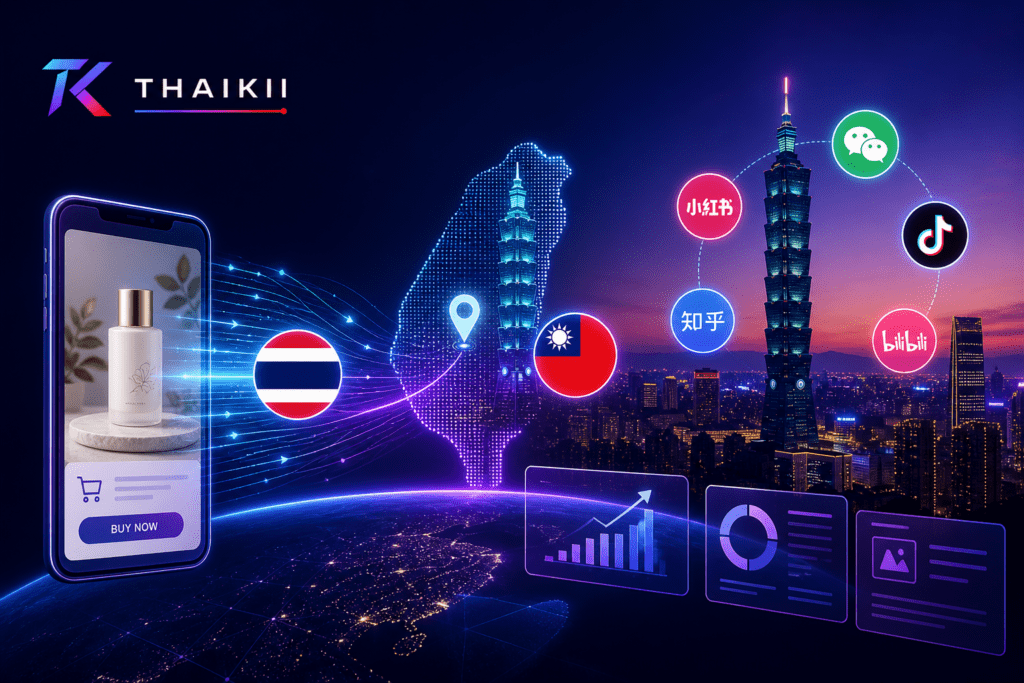
Thai brands can enter the Taiwan market more effectively by building a localized Chinese digital marketing strategy, not by relying on direct translation alone.
Chinese digital marketing is the process of adapting brand messaging, website content, SEO articles, social media communication, KOL campaigns, and lead generation systems for Chinese-speaking consumers.
This strategy is especially suitable for Thai consumer brands, tourism and hospitality companies, wellness and beauty brands, food and beverage businesses, entertainment companies, and B2B brands that want to reach Taiwan and the Greater China market.
Why Taiwan Is a Strategic Market for Thai Brands
For many Thai companies, Taiwan is one of the most practical entry points into the Chinese-speaking market. Taiwan has a mature consumer environment, high digital adoption, strong Google search behavior, active social media communities, and a market culture that is open to international brands when the message feels trustworthy and localized.
Thai brands already have a strong emotional foundation in Taiwan. Many Taiwanese consumers associate Thailand with travel, hospitality, food, wellness, beauty, massage, entertainment, lifestyle design, and cultural warmth. This gives Thai businesses a natural advantage when introducing their products or services to Taiwan.
However, a positive image of Thailand does not automatically create market success. Taiwanese consumers usually need clear information before they make a purchase, book a service, contact a company, or become a business partner. They want to understand the brand story, product quality, pricing logic, user experience, service process, reviews, and long-term value.
This is why Chinese digital marketing is essential. A Thai brand needs more than a translated brochure or a few social media posts. It needs a localized online presence that can explain the brand, build trust, and guide Taiwanese customers from interest to action.
Thaikii helps Thai brands build that bridge. With experience in Chinese-language content, SEO, website planning, social media communication, KOL strategy, and local campaign planning, Thaikii supports Thai businesses that want to enter Taiwan and expand toward the Greater China market with a clearer and more practical strategy.
Chinese Digital Marketing Is Not the Same as Direct Translation
One of the most common mistakes Thai brands make when entering Taiwan is assuming that translation is enough. A brand may already have a strong Thai website, English company profile, or successful social media content in Thailand. But when that content is translated directly into Chinese, it may not create the same response.
The problem is not language accuracy. The problem is market interpretation.
Taiwanese consumers may read the message differently. A slogan that sounds premium in Thai may feel vague in Chinese. A product description that works in English may not answer the questions Taiwanese customers actually care about. A campaign that performs well on Thai social media may not match Taiwan’s search behavior, content habits, or trust-building process.
Chinese digital marketing should not simply ask, “How do we translate this sentence?” It should ask, “How should Taiwanese consumers understand this brand?”
For example, a Thai wellness brand should not only say that its product is natural or premium. It may need to explain the ingredients, usage scenarios, Thai wellness culture, product benefits, and why it fits Taiwanese lifestyles. A Thai food brand may need to communicate authenticity, flavor profile, packaging, import quality, and how consumers can use the product at home. A Thai hotel, clinic, spa, or tourism brand may need to focus on service process, travel convenience, customer safety, and emotional experience.
Localization does not mean changing the brand identity. It means making the brand easier to understand, trust, and choose in a new market.
Start with the Right Taiwan Market Positioning
Before launching ads, opening social media accounts, or creating Chinese content, Thai brands should first define their Taiwan market positioning. The same brand may need a different angle depending on its target audience.
A Thai company can enter Taiwan as a lifestyle brand, a premium imported product, a tourism service provider, a wellness brand, a food and beverage brand, a cultural experience, a B2B supplier, or an e-commerce business. Each position requires a different message and content structure.
For example, a Thai beauty brand entering Taiwan should not only focus on being “popular in Thailand.” It may need to explain product texture, ingredients, skincare benefits, consumer reviews, and why it is different from existing options in Taiwan. A Thai food brand looking for distributors may need to present product category, market demand, packaging advantages, logistics readiness, and cooperation models. A Thai tourism or hospitality brand may need to focus on emotional storytelling, travel planning, service reliability, and booking convenience.
This stage is important because digital marketing without positioning often becomes scattered. The brand may post content, run ads, or contact influencers, but the audience still does not understand why the brand matters.
Thaikii helps Thai brands clarify their market entry direction before execution. This allows every website page, SEO article, social media post, campaign message, and contact form to support the same business goal.
Build a Chinese Website as the Brand’s Digital Foundation
For Thai brands entering Taiwan, a Chinese website is one of the most important trust-building tools. Social media can create visibility, but a website gives the brand a stable place to explain who it is, what it offers, and why Taiwanese customers or partners should take action.
A good Chinese website should not look like a simple company profile translated from Thai or English. It should be structured around local user behavior. Taiwanese visitors usually expect clear navigation, practical information, readable content, brand credibility, contact methods, and enough detail to support decision-making.
Important website sections may include brand story, product or service introduction, market advantages, case studies, FAQ, contact form, campaign landing pages, and SEO articles. For B2B brands, the website should also explain cooperation models, distribution opportunities, and business inquiry channels. For consumer brands, it should provide product usage, lifestyle scenarios, reviews, purchase guidance, and customer education.
A website should also support Google search visibility. Many Taiwanese users still rely on Google when comparing brands, researching products, planning travel, or looking for services. If a Thai brand wants to be found by high-intent users, the website must include SEO-friendly content that answers real search questions.
Thaikii supports Thai brands in building Chinese websites that combine brand presentation, SEO structure, and conversion design. The goal is not only to look professional, but also to help the brand become searchable, understandable, and contactable.
Use SEO to Reach Taiwanese Consumers at the Right Moment
SEO is one of the most valuable long-term tools for Thai brands entering Taiwan. Unlike paid ads, SEO allows a brand to reach people when they are already searching for information. This is especially useful for products and services that require trust, comparison, explanation, or education.
Taiwanese consumers often search before they buy. They may look for product recommendations, brand reviews, comparison articles, usage guides, price information, travel experiences, service details, or market explanations. If a Thai brand can answer these questions in Chinese, it has a better chance of entering the consumer’s decision-making process.
For example, a Thai wellness brand can create articles about Thai herbal culture, wellness routines, ingredient benefits, product selection, and lifestyle use cases. A Thai tourism brand can publish guides about seasonal travel, local experiences, hotel selection, spa culture, food experiences, and itinerary planning. A Thai B2B company can create content about industry trends, sourcing opportunities, supplier advantages, and cooperation models between Thailand and Taiwan.
SEO content should not be written only for algorithms. It should be useful to real people. The best SEO strategy combines search keywords, practical answers, brand expertise, and a natural reading experience.
At Thaikii, we help Thai brands plan Chinese SEO content that supports both visibility and trust. This means choosing the right topics, writing in a style that fits Taiwanese readers, and connecting each article with a clear business purpose.
Social Media Should Be Localized for Taiwanese Audiences
Social media is another important channel for Thai brands entering Taiwan, but the content style must be adapted. Taiwanese users often respond well to content that is clear, visually attractive, useful, and authentic. They may enjoy emotional brand storytelling, but they also expect practical information and credibility.
Thai brands should avoid using only generic promotional posts. A stronger approach is to combine brand story, product education, lifestyle scenes, customer proof, behind-the-scenes content, and local campaign messages.
For example, a Thai lifestyle brand can show how its product fits daily life in Taiwan. A Thai food brand can introduce flavor, cooking methods, cultural background, and ways to enjoy the product with family or friends. A Thai tourism brand can connect travel memories with practical booking information. A Thai entertainment or cultural brand can use short-form content to build emotional connection while guiding users to events, websites, or communities.
The tone should also be adjusted. Taiwanese audiences usually prefer communication that feels friendly but not exaggerated, professional but not cold, and informative without being too aggressive. Overly direct sales language may reduce trust, while vague branding may fail to convert.
Thaikii helps Thai brands transform their original brand materials into localized Chinese social media content. This includes content planning, Chinese copywriting, campaign angle development, visual direction, and platform-specific communication.
KOL Marketing and Local Campaigns Can Build Initial Trust
For many Thai brands, KOL marketing can accelerate market entry in Taiwan. Local creators, bloggers, influencers, media pages, and niche communities can help introduce the brand to Taiwanese audiences in a more familiar voice.
However, KOL marketing should not be treated as simply paying someone to post. The effectiveness depends on choosing the right creator, designing the right message, and connecting the campaign with a larger strategy.
A beauty brand may need skincare creators who can explain texture, usage, and product experience. A food brand may work with lifestyle creators, cooking creators, or Southeast Asia culture pages. A tourism brand may need travel creators who can communicate both emotion and practical information. A B2B brand may benefit more from industry content, media-style interviews, or professional community exposure.
Offline activities can also strengthen digital marketing. Pop-up events, tasting sessions, private brand showcases, product demonstrations, business matching events, and media briefings can help Thai brands create stronger local impressions. When digital visibility and physical experience work together, the brand becomes more memorable and credible.
Thaikii supports Thai brands in planning KOL cooperation and local campaign concepts that match their market entry goals. The goal is not only exposure, but meaningful connection.
Taiwan as a Gateway to the Greater China Market
For Thai brands, Taiwan can be more than a single market. It can also become a testing ground for Chinese-language communication before expanding further into Hong Kong, China, or overseas Chinese communities.
The Greater China market is not one single audience. Taiwan, Hong Kong, China, Singapore, Malaysia’s Chinese-speaking communities, and overseas Chinese consumers all have different language habits, platform preferences, regulations, and consumer expectations. A message that works in one market may need adjustment in another.
Taiwan is valuable because it allows Thai brands to test Chinese content, understand consumer questions, collect feedback, refine product positioning, and build digital assets. If a brand can communicate clearly in Taiwan, it will be better prepared to adapt its strategy for other Chinese-speaking markets.
This is especially useful for Thai companies in lifestyle, food, beauty, wellness, entertainment, tourism, education, and B2B sectors. These industries often require storytelling, trust, cultural adaptation, and long-term brand building.
Thaikii helps Thai brands use Taiwan as a practical starting point. By building a Chinese website, SEO articles, social media presence, and localized campaigns, the brand can gradually develop a stronger foundation for regional expansion.
What Thai Brands Should Prepare Before Entering Taiwan
Before entering the Taiwan market, Thai brands should review whether their brand materials are ready for Chinese digital marketing. Many companies already have good products or services, but their information may not be complete enough for a new market.
The brand should prepare its story, product information, service details, target audience, pricing structure, visual identity, photos, videos, customer reviews, certificates, distribution model, and contact process. These details help Taiwanese customers and partners understand the brand faster.
The company should also clarify its first-stage goal. Is the brand trying to build awareness, find distributors, generate online sales, attract tourists, promote an event, test the market, or build long-term brand recognition? Different goals require different strategies.
A brand that wants distributors should focus on market potential, product category, cooperation model, and business credibility. A brand that wants direct consumers should focus on product education, reviews, lifestyle use, and purchase guidance. A brand that wants tourism customers should emphasize experience, trust, location, service process, and booking convenience.
Market entry does not always require a large starting budget. It requires a clear foundation. A focused Chinese website, a few strong SEO articles, consistent social media content, and a well-designed inquiry process can already help a Thai brand begin building visibility in Taiwan.
How Thaikii Helps Thai Brands Enter Taiwan
Thaikii is built to support cross-border marketing between Thailand and Chinese-speaking markets. We understand that Thai brands often have strong cultural appeal, attractive products, and meaningful stories, but they need the right Chinese communication strategy to reach Taiwanese consumers and business partners.
Our services include Chinese website planning, SEO article writing, Chinese copywriting, brand localization, social media content planning, Taiwan market entry strategy, KOL campaign planning, offline event support, and lead generation design.
More importantly, Thaikii does not treat localization as direct translation. We help brands rebuild their message for the target market while keeping the original brand identity. This is especially important for Thai companies that want to appear professional, trustworthy, and relevant in Taiwan.
A strong market entry strategy should connect every digital touchpoint. The website should explain the brand clearly. SEO articles should bring in search traffic. Social media should build familiarity. KOL campaigns should increase trust. Local activities should create real-world connection. Contact forms and landing pages should turn interest into business opportunities.
This is the type of integrated support Thaikii provides for Thai brands preparing to enter Taiwan and the Greater China market.
Building Long-Term Growth Beyond Translation
Thai brands already have many advantages in Taiwan. The cultural image of Thailand is positive, and Taiwanese consumers are familiar with Thai travel, food, wellness, beauty, hospitality, and entertainment. But to turn this familiarity into business growth, brands need a structured Chinese digital marketing strategy.
The brands that succeed in Taiwan are usually the ones that invest in clear communication, localized content, search visibility, social media trust, and consistent market education. They do not only introduce themselves once. They build a digital presence that helps customers understand, remember, and choose them.
For Thai companies that want to enter Taiwan, this is the right time to build a stronger Chinese-language foundation. A localized website, SEO strategy, social media plan, KOL cooperation, and practical market entry roadmap can help your brand move from being known in Thailand to being trusted by Taiwanese consumers.
Thaikii helps Thai brands make that transition. With experience in cross-border marketing, Chinese-language content, digital strategy, and localized communication, we support businesses that want to grow beyond borders and reach the right audience with the right message.
If your Thai brand is preparing to enter Taiwan, expand into Chinese-speaking markets, or build a more professional Chinese digital presence, Thaikii can help you create the strategy, content, and local connection needed for the next stage of growth.
With years of cross-border marketing experience, THAIKII Marketing helps brands build meaningful connections with Chinese-speaking audiences across Taiwan, China, Hong Kong, and other key Asian markets.
From SEO strategy and social media management to Chinese website development, local offline events, and KOL collaborations, we provide flexible support based on each brand’s market goals, industry background, and target customers. Whether you are planning your first market entry or looking to strengthen your existing presence, our team can help you create a localized, practical, and results-oriented marketing approach.
Frequently Asked Questions (FAQs)
Taiwan is a strong entry point for Thai brands because Taiwanese consumers are familiar with Thai culture, travel, food, wellness, beauty, and lifestyle products. The market also has high digital adoption, active Google search behavior, and strong social media usage, which makes it suitable for brands that want to build visibility through Chinese digital marketing.
Thai brands should usually begin with a Chinese website, SEO articles, social media content, localized landing pages, and inquiry forms. Depending on the industry, KOL campaigns, local events, pop-up experiences, media exposure, and B2B outreach may also be useful.
In most cases, yes. A Chinese website helps build credibility and gives Taiwanese customers or partners a place to understand the brand in detail. It also supports Google SEO, advertising campaigns, social media traffic, and lead generation.
Discover more from Thaikii 泰奇行銷
Subscribe to get the latest posts sent to your email.